The signs that most often point to a real foundation problem are stair-step cracks in brick, doors and windows that start sticking, floors that slope, and gaps opening between walls and trim. One hairline crack on its own is rarely an emergency. Several signs together, or a crack that keeps growing, is a good reason to have someone look at the house.
By Willie Smith, W.J. Smith Construction
Key facts
- Foundation trouble in Greenville, NC shows as stair-step brick cracks, sticking doors, sloping floors and wall gaps.
- Cracks wider than about a quarter inch, or still growing, need a professional look.
- W.J. Smith Construction offers a free inspection of 60 to 90 minutes.
- Service area: Greenville, Winterville, Ayden and nearby towns. Phone: (252) 304-3012.
Houses in Eastern North Carolina move a little every year. Clay soil takes on water in spring and gives it back in summer, and the house rides along on top of it. Most of that movement is harmless. The skill is telling normal seasonal movement from settlement that keeps going. Here is what to look at.
What are the first signs of foundation trouble?
The first signs of foundation trouble usually show outside the house, in brick and around frames. Start outside, then work in.
Outside the house, look for these signs.
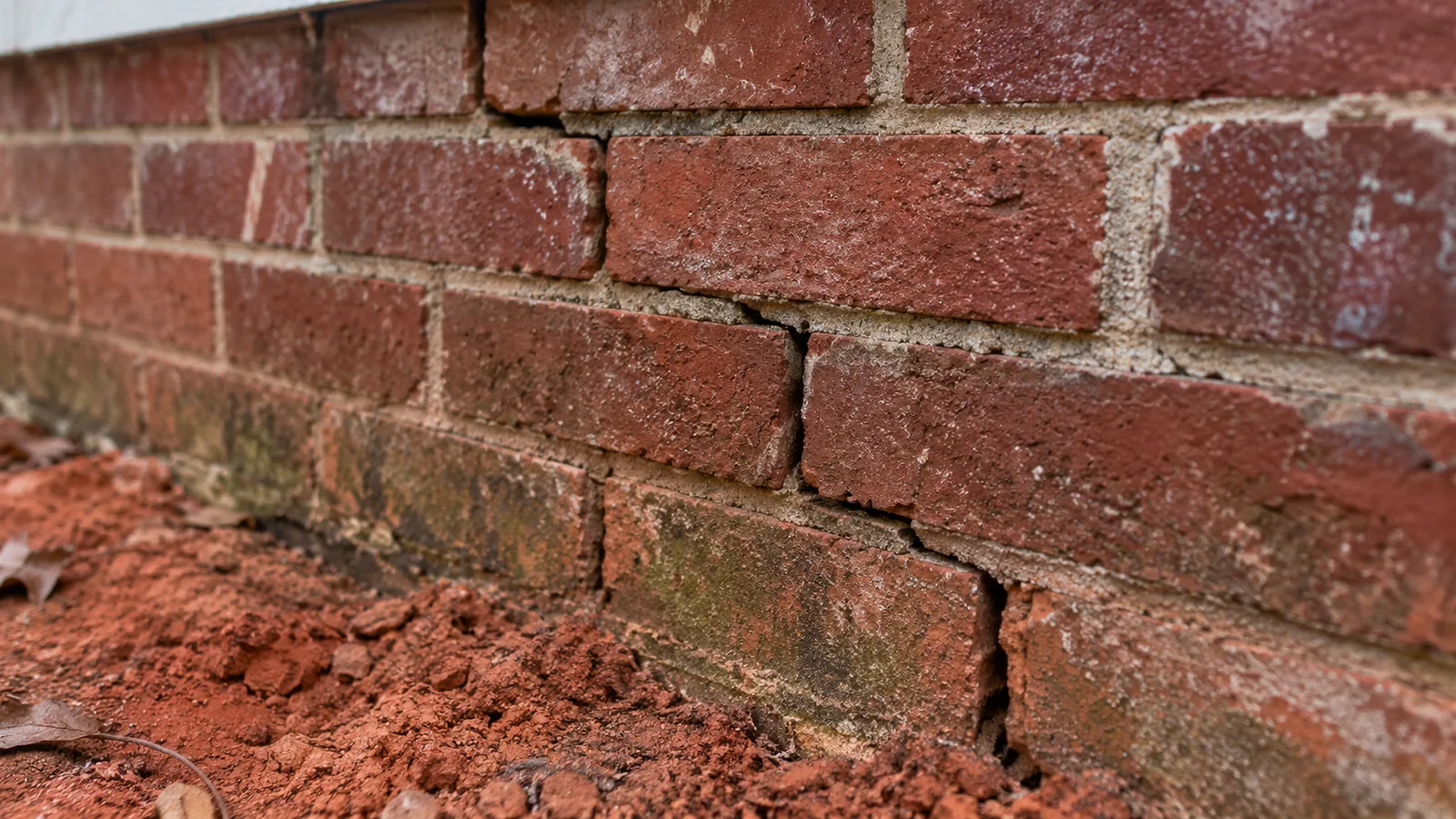
- Stair-step cracks running along the mortar lines of a brick wall
- Gaps between the wall and a window or door frame
- A chimney that seems to be pulling away from the house
- Horizontal cracks in a block or concrete foundation wall
- Water that sits next to the foundation after rain
- Soil that has pulled away from the foundation
Inside the house, look for these signs.
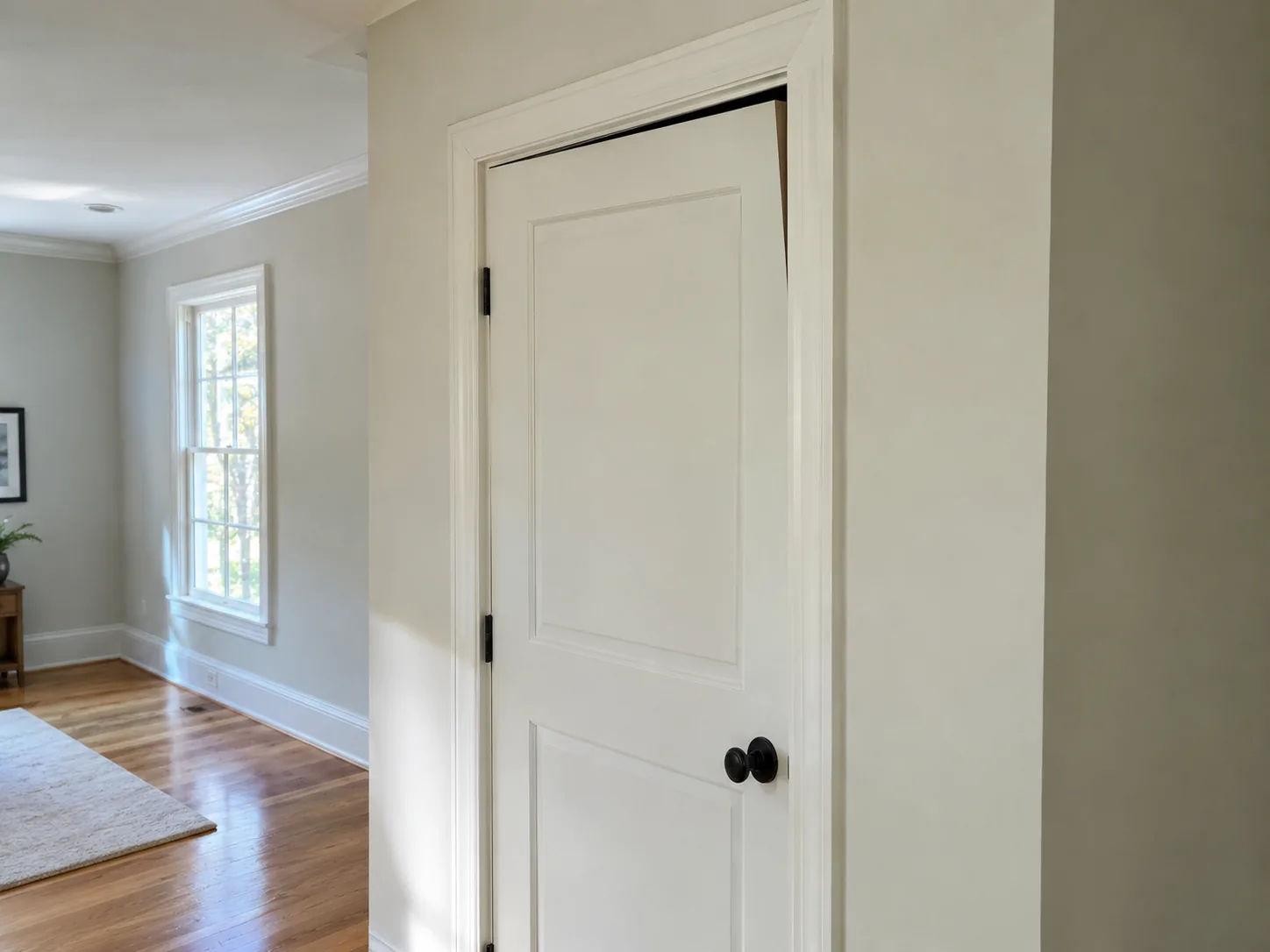
- Doors and windows that stick or will not latch
- Cracks in drywall, especially running up from the corners of doors and windows
- Floors that slope or feel soft
- Gaps where walls meet the ceiling or floor
- Cracked floor tile
Why does clay soil in Greenville cause these problems?
Clay soil in Greenville causes these problems because it swells and shrinks with moisture, so the footings get uneven support. Pitt County sits on the Atlantic Coastal Plain, and its soil is clay-heavy. Clay swells when it is wet and shrinks when it dries, and the amount of water in it changes with the seasons, with heavy rain and with dry spells. A high water table and humidity that often exceeds 80 percent keep the ground and the crawl space damp.
One local pattern to know: after a wet spring, swelling soil can push a crack closed for a while. When summer dries the ground out, the crack opens again, sometimes wider. A crack that appears to heal is not necessarily fixed.
Which foundation cracks are serious?
Serious foundation cracks are horizontal, wider than about a quarter inch, or still growing.
- Horizontal cracks in a foundation wall are the most serious, because they can mean the wall is being pushed in.
- Stair-step cracks in brick usually mean one part of the house has settled relative to another.
- Cracks wider than about a quarter inch, or ones that keep growing, need a professional look.
- Thin vertical hairline cracks in new concrete are often just curing and drying. They still deserve a pencil mark and a date.
A crack that comes with a bowing wall or a visibly lower corner should be evaluated soon. Our free inspection starts at exactly that point.
Cracks that are normal and not a foundation problem
Many cracks in a Greenville home are not a foundation problem. Brick and mortar crack from temperature changes and shrinkage, and thin vertical hairline cracks in new concrete are usually just curing. A crack that has not changed over several months of pencil-mark checks is far less worrying than one that has.
Do sticking doors always mean the foundation is moving?
No. Wood swells in humid Carolina summers, and a door can stick for that reason alone. What points to the foundation is a door that sticks along with cracks, a changing gap at the frame, or several doors in the same area of the house acting up at once. A door that sticks only in August and frees up in winter is usually weather.
What does a crawl space foundation show?
Many Greenville homes sit on a crawl space, and the signs are a little different. Floors may feel soft or bouncy, the house may smell musty, and a flashlight check may show damp soil, sagging insulation or darkened wood. Those can be moisture problems rather than settlement. If you are not sure which you have, read foundation repair vs crawl space repair and our crawl space repair page.
How can I track a crack at home?
- Draw a pencil line across the crack at both ends and write the date beside it.
- Photograph it with a coin or tape measure for scale.
- Check it every month and after heavy rain.
- Note which doors stick and when.
Angi’s cost guide gives the same basic advice: mark cracks and watch for changes over a few months. Bring that record to the inspection. It helps a lot.
What should I do if I think my house needs foundation repair in Greenville, NC?
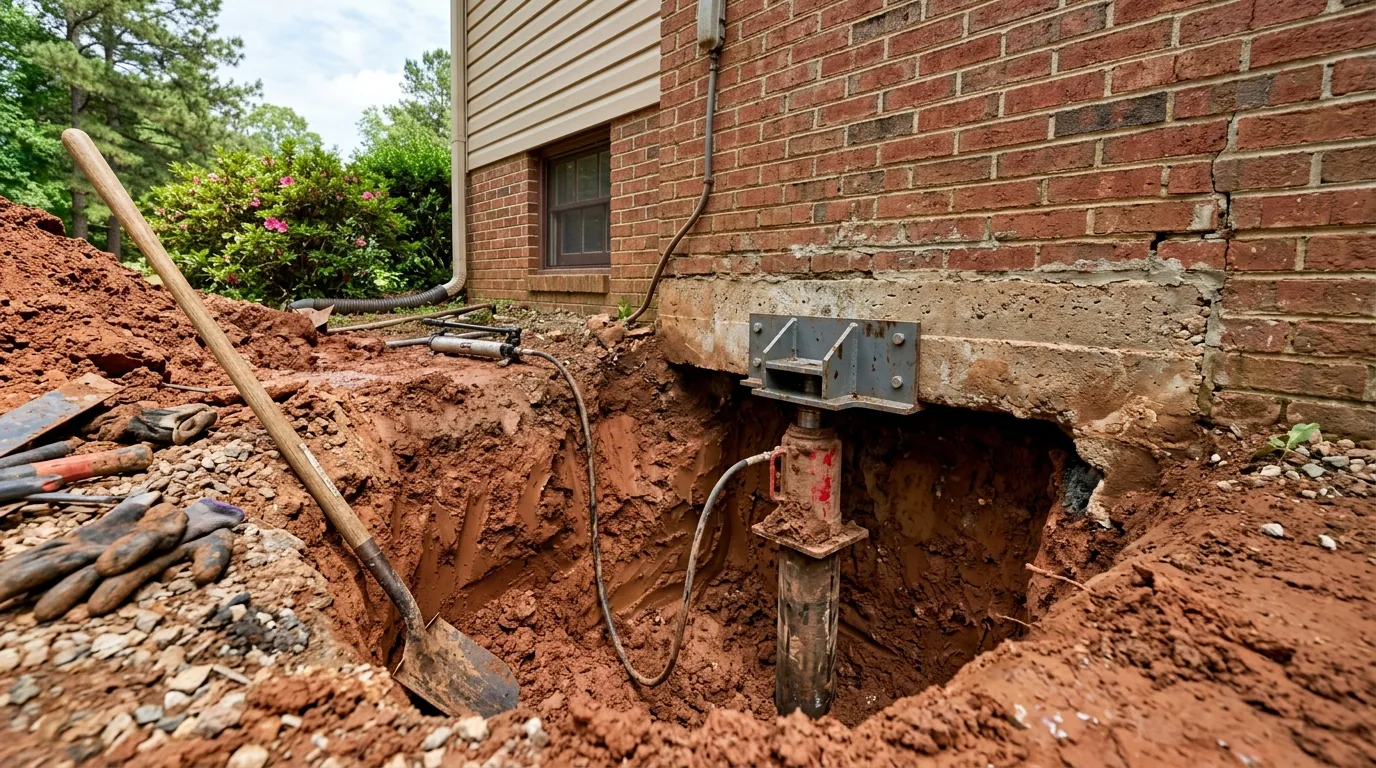
Foundation repair in Greenville, NC starts with a diagnosis, not a repair. Start with a diagnosis. Fix drainage problems you can see, such as a downspout dumping next to the wall, then have the house inspected. If the signs point to settlement, our foundation repair in Greenville, NC process begins with a free inspection and a proposal with options. If you want to understand whether piers would even be on the table, read do you need foundation piers. For price context, see what foundation repair costs in Greenville.
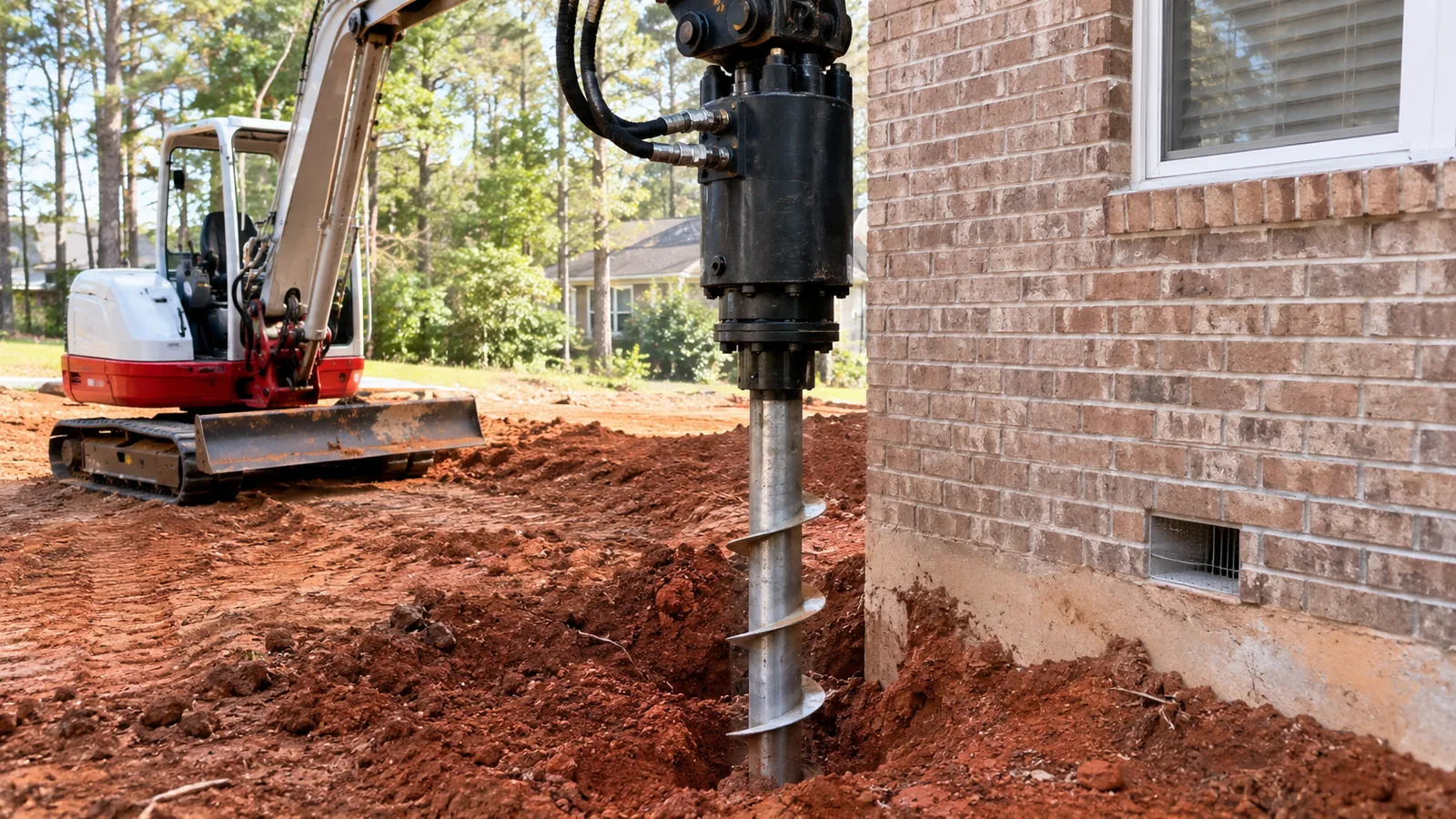
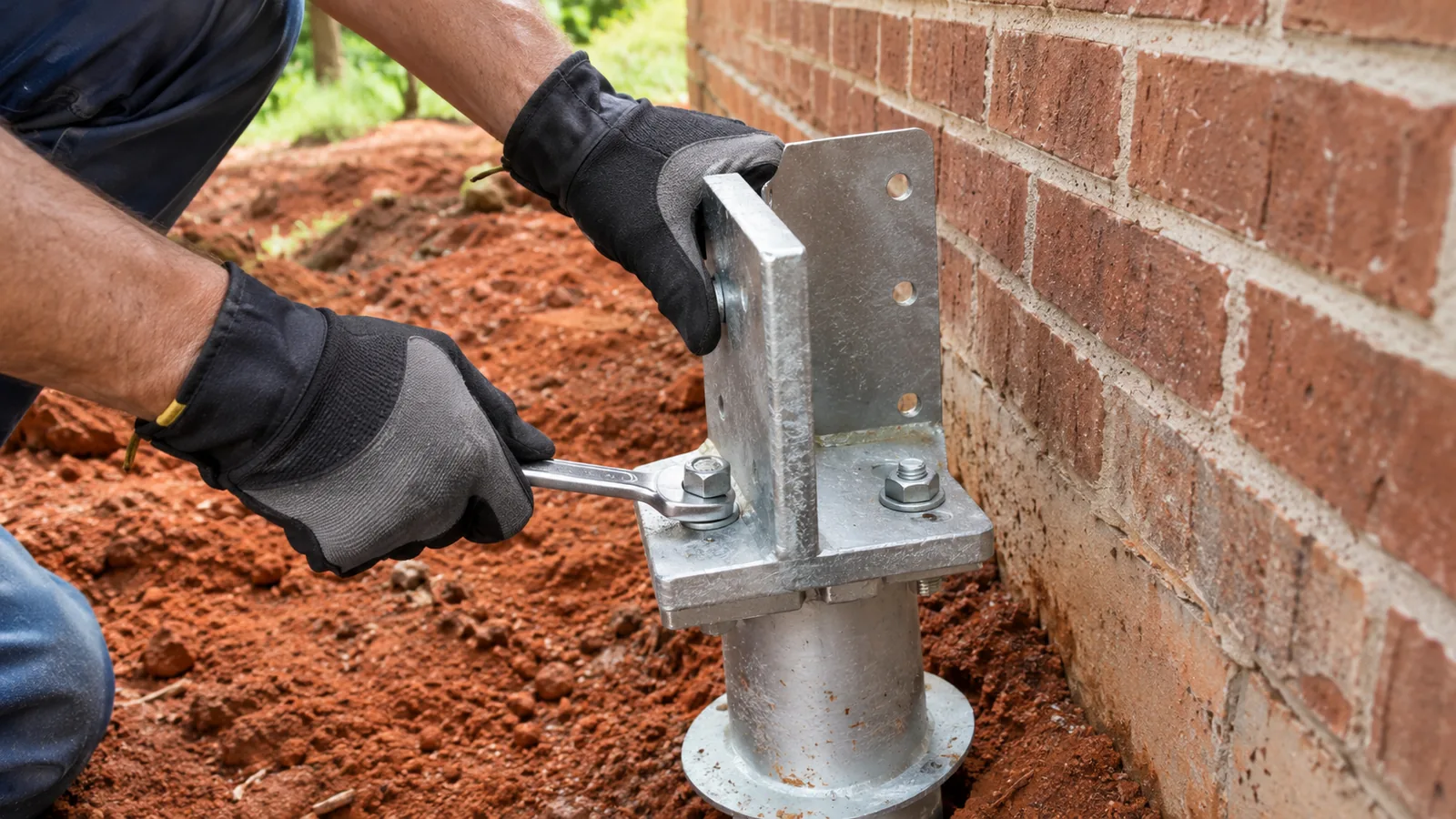
If you want to compare repair approaches before the inspection, our posts on helical vs push piers and foundation repair methods cover them.
Frequently asked questions
Are cracks in a brick house always a foundation problem?
No. Brick and mortar crack from temperature changes and shrinkage too. Stair-step cracks, cracks wider than a quarter inch and cracks that grow are the ones worth checking.
How fast does foundation damage get worse?
It depends on the cause. Slow seasonal movement can take years. A leaking pipe or a drainage problem can speed things up, which is why tracking cracks matters.
Should I walk away from buying a house with these signs?
Not automatically. A house with a documented, professional repair can be fine. Get the inspection before you close, not after.
Who does foundation repair in Greenville, NC?
W.J. Smith Construction inspects and repairs foundations in Greenville, NC, Winterville, Ayden and nearby towns, starting with a free inspection.
Have us take a look
Call W.J. Smith Construction in Greenville, NC at (252) 304-3012 to schedule a free foundation inspection in Greenville, Winterville, Ayden and nearby towns, or request a free quote.