Most foundation pier jobs take one to three days on site, and a house that needs many piers can take closer to a week. The crew digs down beside the footing, attaches a steel bracket, drives or screws piers to firm ground, then locks the house onto them and fills the holes back in. The steps below show what happens and in what order.
By Willie Smith, W.J. Smith Construction
Key facts
- Foundation pier installation in Greenville, NC takes one to three days on site for most jobs, and closer to a week for many piers.
- Push piers (also called resistance piers) are driven by hydraulics; helical piers are screwed into the soil to a target depth.
- Both types carry the house down to firm ground below weak clay.
- W.J. Smith Construction starts every job with a free inspection. Phone: (252) 304-3012.
Pier installation looks dramatic from the yard: excavators, hydraulic jacks, a lot of dirt. It is actually a methodical job. If you know the order of events, the week gets a lot less stressful.
What happens before the crew arrives?
The work starts with the inspection and the written plan. We document the cracks, measure how far the floors are out of level, and identify the likely cause. You get a written report and a proposal that lists the pier locations. Before any digging, underground utility lines are marked. In North Carolina that means a call to NC 811, which is free and required before excavation.
How are foundation piers installed, step by step?
Foundation piers are installed in eight steps, from digging access holes to backfilling the yard.
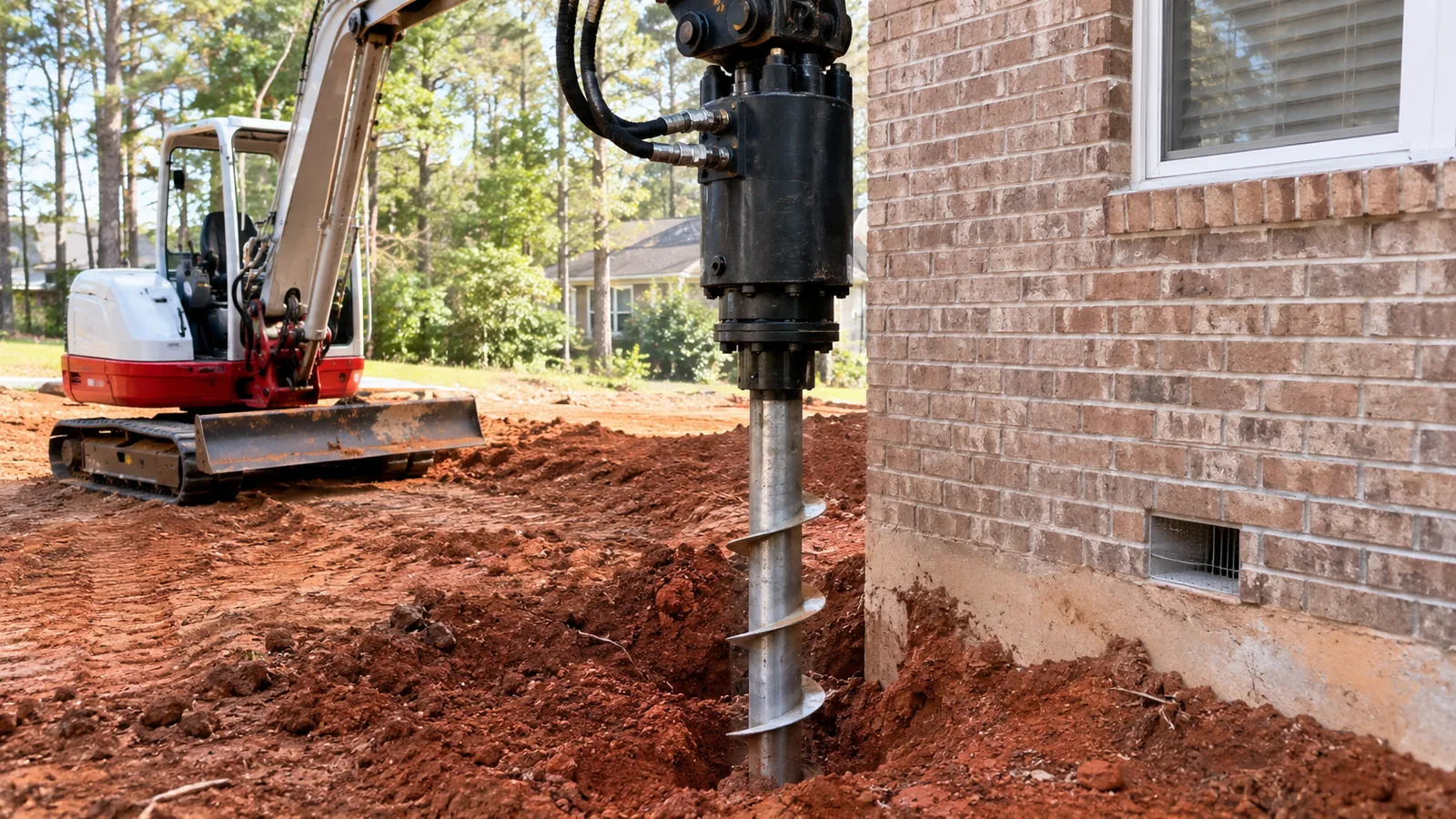
- Dig access holes. The crew excavates beside the foundation at each planned pier location, down to the footing. The soil is set aside for backfill.
- Prepare the footing. The footing face is cleaned so a steel bracket can seat against it.
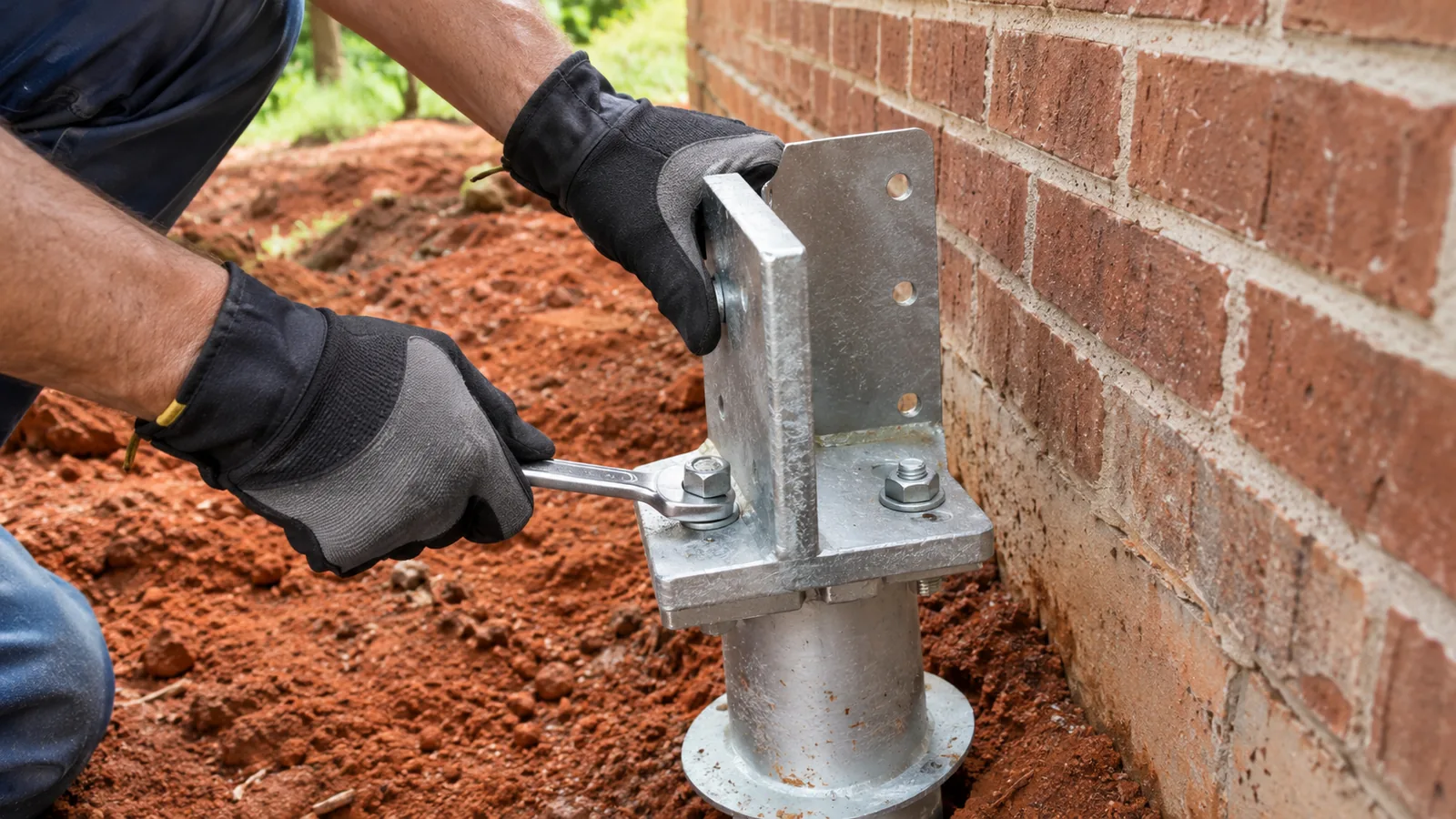
- Attach the bracket. The bracket fastens to the footing and gives the pier something to lift and hold.
- Drive or screw the pier. With push piers, hydraulic force drives steel sections down, using the weight of the house for resistance, until they hit firm ground or rock. With helical piers, a machine turns a screw-shaped shaft into the soil to a target depth. The difference is covered in helical piers vs push piers.
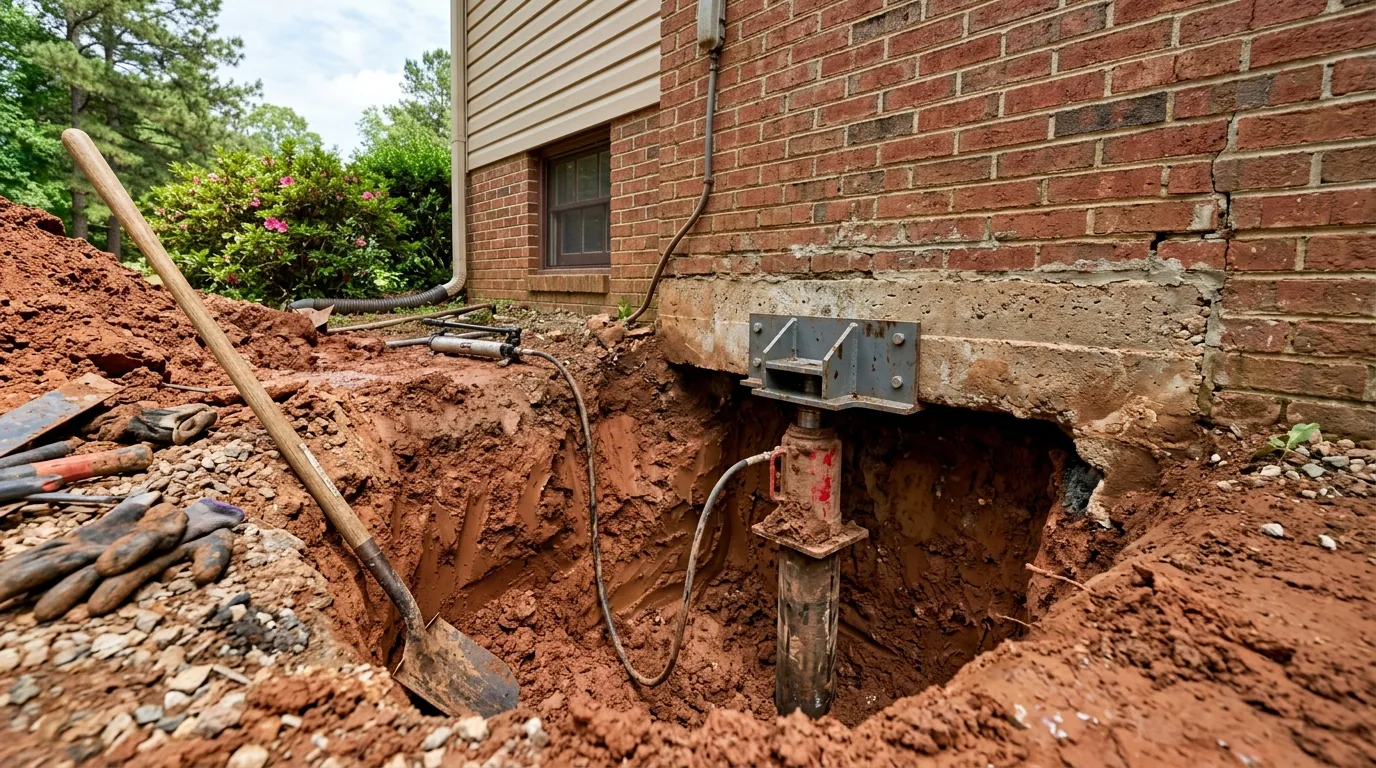
- Transfer the load. Once the piers are deep enough, the weight of the house is transferred from the footing to the piers.
- Raise and level, where possible. The crew can lift the structure with hydraulics, in stages, to bring floors back toward level. How much lift is practical depends on the house, and some homes are stabilized rather than fully raised.
- Lock off. The pier and bracket are fixed in position so they stay where they are.
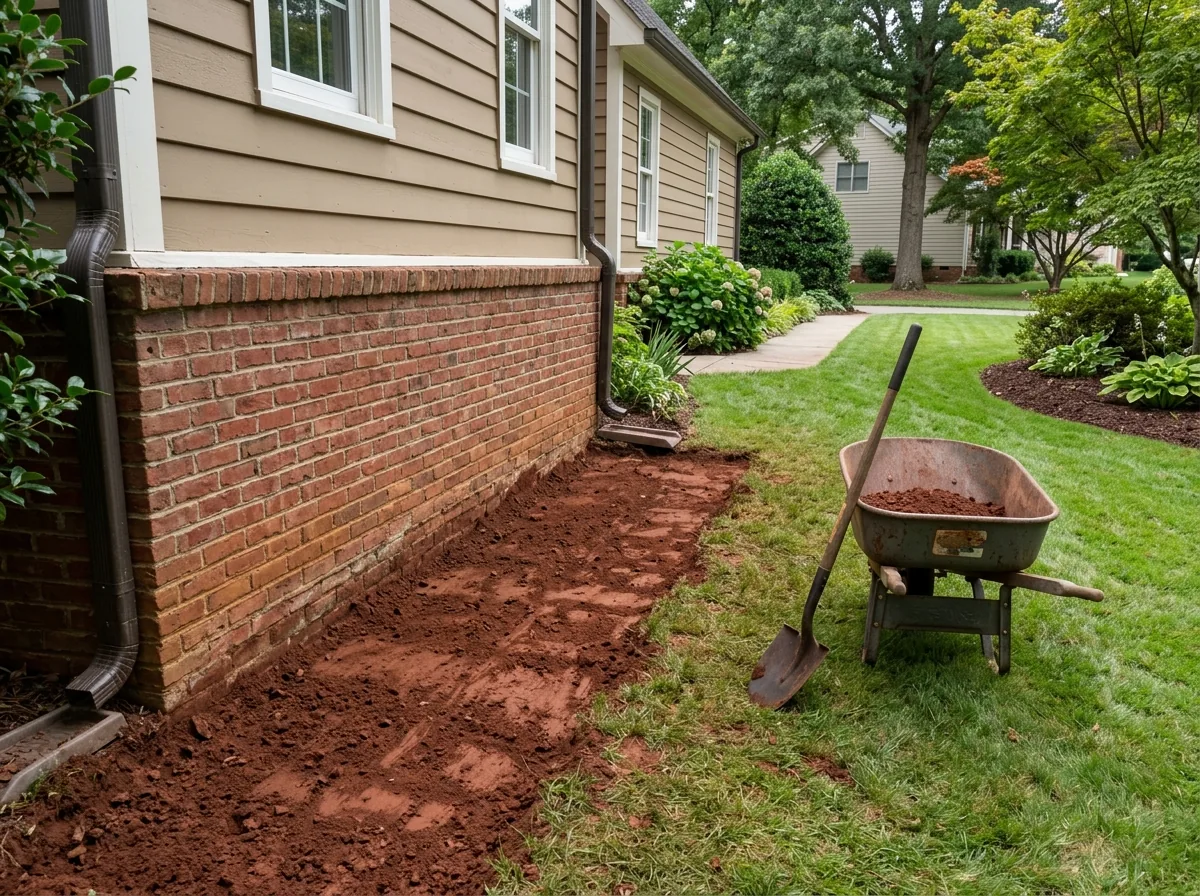
- Backfill and restore. The holes are filled and compacted, and the yard is cleaned up. Landscaping touch-up depends on the job.
How long does foundation pier installation take?
Foundation pier installation takes one to three days on site for most of our jobs, and work with many piers can take up to a week. Several things change the schedule.
- Pier count and depth to firm soil
- Access, such as decks, tight crawl space clearance or a slab that has to be opened from inside
- Weather, since heavy rain stops excavation
- Whether drainage or grading work is part of the proposal
Plan on a few days of noise and a trench-lined yard. After the piers are in, the house usually still needs a few weeks to settle before cosmetic repairs such as drywall cracks and sticking doors are touched up.
What can delay foundation pier installation?
Delays in foundation pier installation come from a few things that come up often enough to know about ahead of time. Buried obstacles such as an old irrigation line or a forgotten footing can change a pier location by a few feet. Wet weather turns an open excavation into mud and can push work back a day. A crawl space with low clearance makes every step slower because the crew works on their backs. None of these is a reason to worry. They are the reason the proposal gives a range for the schedule instead of a promise to the hour, and the reason we tell you when something shifts.
What does it mean when the house is on piers?
It means the footing no longer depends only on the soft clay it was built on. In Greenville, where clay swells and shrinks, that matters. Piers do not stop the soil from moving. They keep the house from moving with it. Water management still counts, so the proposal often includes gutters or grading too.
What should I do before and after installation?
Before: move vehicles, planters and outdoor furniture away from the work area, and tell us about buried items such as irrigation lines or invisible dog fences.
After: keep watching. Mark any cracks again, and note whether doors still stick. Re-checking a month later gives you real information. Keep your written warranty and report together with your closing papers.
How much does installing piers cost?
National sources put piers around $1,000 to $3,200 each, depending on type and conditions (Angi, 2026; Forbes Home, 2025). Total price depends on pier count, depth and access. Our Greenville foundation repair cost guide covers those factors, and do you need foundation piers helps you decide whether the job is needed at all.
Frequently asked questions
Can I stay in the house during pier installation?
In most cases, yes. The digging is outside, or at the crawl space. Interior slab work is the exception and creates dust and noise inside.
Will the house be lifted all the way back to level?
Not always. We lift as much as can be done safely. Forcing a house too far can crack finishes and plumbing.
Do piers work in clay soil?
Yes. Piers are driven past the shifting clay to firm ground, which is why they are used where soil is expansive.
Who installs foundation piers in Greenville, NC?
W.J. Smith Construction installs foundation piers in Greenville, NC and nearby towns, after a free inspection confirms that piers are the right fix.
Next step
Our process for foundation repair in Greenville, NC starts with a free inspection. Call W.J. Smith Construction at (252) 304-3012 or request a free quote. You can also read how the main foundation repair methods compare before we visit.